


AI shopping agents are apps and browser assistants that search, compare, and sometimes buy products for you, based on one instruction instead of a manual search. They are moving fast from a novelty into everyday checkout, and banking groups are now warning regulators about the scams, fraud, and privacy risks that come with letting software hold your payment details and make the final call.
If you sell online, run an affiliate site, or just do your own shopping, this affects you either way: as a buyer deciding whether to trust one, or as a seller whose customers increasingly arrive through one. Here is what these agents actually do, where the real risk sits, and how to use them without exposing yourself.
In This Guide
- What an AI shopping agent actually is
- How they work, step by step
- Why banks are sounding the alarm
- Red flags to watch for
- A quick safety checklist
- What this means if you sell online
- Quick answers
What an AI Shopping Agent Actually Is
An AI shopping agent is different from a chatbot that just answers questions. You give it a goal in plain language, such as finding a specific product within a budget, and it goes further than a search engine: it compares listings, reads reviews, and in some cases completes the purchase using payment details you have already connected. The convenience is real. So is the fact that you are handing a decision, and sometimes your card, to software.
How They Work, Step by Step
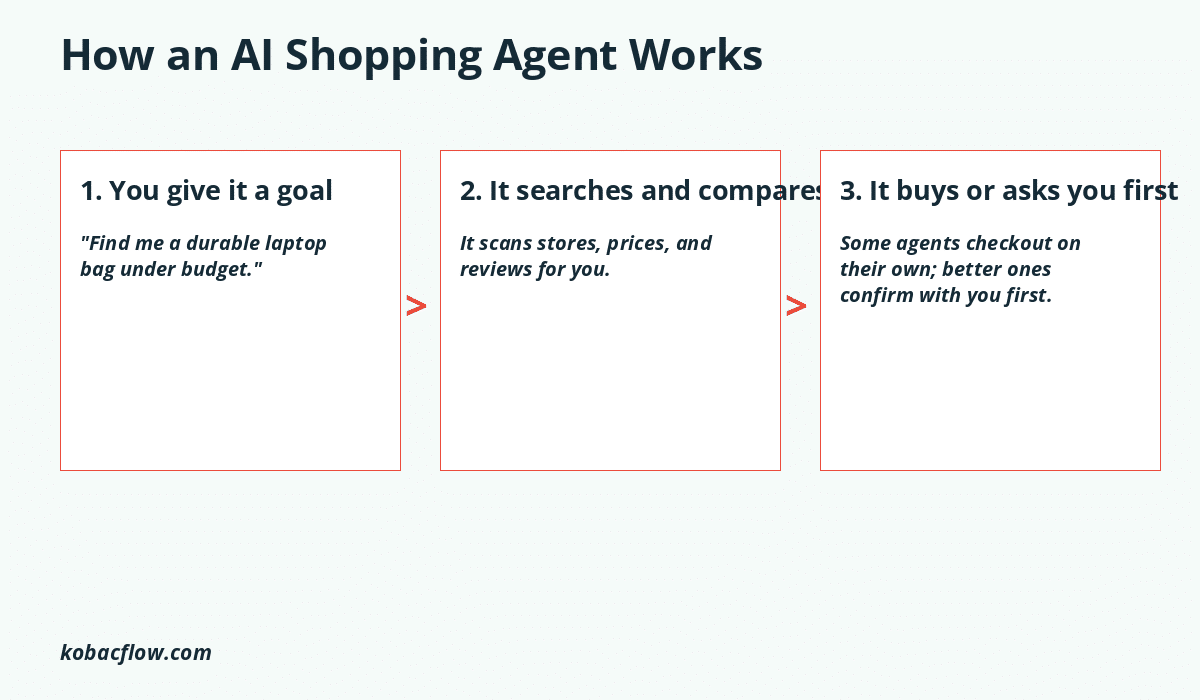
- You state a goal in plain language, like a product, a budget, and any must-have features.
- The agent searches and compares across stores, pulling prices, reviews, and availability faster than you would by hand.
- It either checks out automatically using saved payment details, or asks you to confirm before the purchase completes. This one difference is the most important safety feature to look for.
Why Banks Are Sounding the Alarm
Reporting this month cited banking industry groups warning regulators about scams, fraud, and privacy exposure tied to AI shopping bots. The core problem is not the idea of an agent shopping for you. It is what happens when an agent is designed to skip confirmation, when it is tricked by a fake storefront it was never meant to visit, or when your saved card and address sit inside a system with weaker protections than your bank’s own checkout.
There is also a personalization risk worth naming plainly: an agent that learns your habits to shop better is also building a profile of you. On a shared device or a shared account, that profile can reveal more about you to other people than you intended.
Red Flags to Watch For
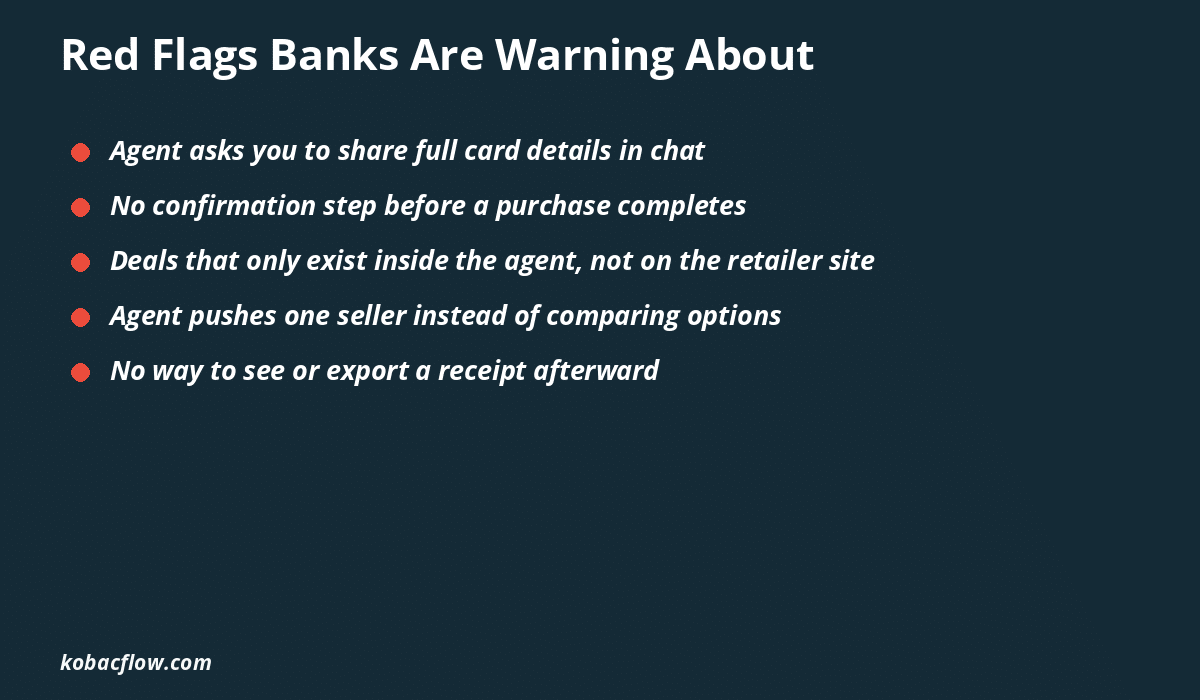
- It asks you to type or paste your full card number directly into a chat window.
- It completes a purchase with no confirmation step and no order summary shown first.
- A “deal” only appears inside the agent and cannot be found on the retailer’s own site.
- It keeps steering you to one seller instead of showing real alternatives.
- You cannot easily find or export a receipt after the purchase.
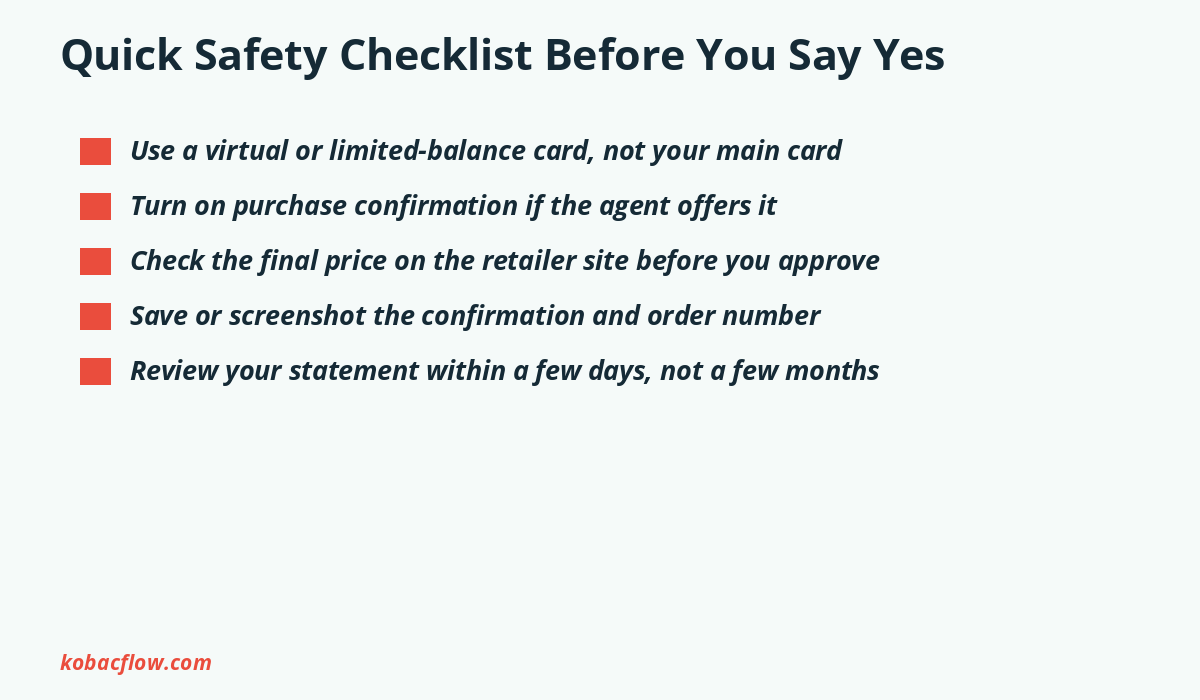
A Quick Safety Checklist
You do not need to avoid these tools. You need a few habits that keep control in your hands:
- Connect a virtual card or a card with a low limit, not your primary account.
- Turn on purchase confirmation in the agent’s settings if that option exists.
- Check the final price and seller on the retailer’s own site before you approve anything.
- Save the confirmation screen or order number the moment a purchase completes.
- Check your bank statement within days, not months, while a dispute is still easy to file.
What This Means If You Sell Online
If you run a store, an affiliate site, or promote products for a living, agent-driven traffic is a new channel you cannot fully see yet. An agent comparing options on a customer’s behalf will judge your listing on the same things a careful human would: clear pricing, accurate stock status, and reviews that hold up. Keep your product pages accurate and your policies easy to find in plain text, since that is what an agent parses fastest, and treat any sudden spike in orders with no browsing history the same way you would treat unfamiliar traffic: verify before you ship.
Quick Answers
Are AI shopping agents safe to use? They can be, if the agent confirms purchases with you and you use a limited-exposure card. Treat one that skips confirmation as a risk, not a convenience.
Can an AI agent see my full card number? It depends on the tool. Some store tokenized payment details similar to how your phone’s wallet works; others ask for more than they should. If you are unsure, do not connect your primary card.
Should online sellers worry about this trend? Not worry, but prepare. Accurate listings and clear policies matter more as more traffic arrives pre-filtered by software instead of a person browsing directly.
Bottom line: the convenience of AI shopping agents is real, and so is the warning from banks. Use a limited card, keep confirmation on, and treat the receipt as proof, not an afterthought. If you want more practical AI safety and tool guides like this, subscribe to the Kobacflow newsletter.